CONRADI +
CHRISTENSEN
Florian Conradi and Michelle Christensen are a design and research collective based in Berlin. Combining their backgrounds in political-, conflict-, gender-sociology and design in the form of critical practice, writing and teaching, they attempt to formulate the spaces in between these realms.
Their work is an endeavour in to exploring the politics of objects, material-sociology, and practice-based theory. They work on project base with institutions from the fields of social/political advocacy, critical media, design and academia.
Michelle Christensen – Michelle studied political sociology at Roskilde University (B.A.), conflict studies at Utrecht University (M.A.), gender studies at the University of Amsterdam (M.Sc.), and integrated design at the Köln International School of Design in Cologne (M.A.). She wrote her Ph.D. at the Berlin University of the Arts in the field of design research. She has worked at the Crisis Department of Amnesty International USA, was a Humanity in Action Fellow, and a Congressional Fellow in the United States Congress in Washington DC. From 2019-2026, she was a visiting professor for Open Science & Critical Culture at the Technische Universität Berlin and the Einstein Center Digital Future, and from 2014-2024 she was a board member of the German Society for Design Theory and Research (DGTF).
Currently, she co-heads the research group Design, Diversity and New Commons at the UdK Berlin in the framework of the Weizenbaum Institute, and teaches as a visiting professor at the International Master Program in Integrated Design at the Anhalt University of Applied Sciences in Dessau. Since 2015 she is a member of the Board of International Research in Design (BIRD) at Birkhäuser, since 2024 she is a Principal Investigator in the research cluster Matters of Activity at the Humboldt-Universität zu Berlin, and in 2023 she joined the Board of Directors of the Einstein Center Digital Future in Berlin.
Florian Conradi – Florian studied art and design at the Sandberg Institute in Amsterdam (MFA), the Bezalel Academy of Art and Design, the Köln International School of Design in Cologne (MA), and wrote his Ph.D. in the field of Design Research at the Berlin University of the Arts (UdK Berlin). Since 2008 he has been initiating sociopolitical design projects with institutions in the field of critical media and political advocacy, carrying out field research in Europe, as well as in the Middle East, East and West Africa. From 2019 till 2024 he was a visiting professor for Open Science / Critical Design at the Einstein Center Digital Future / Institute of History and Philosophy of Science, Technology and Literature at the Technische Universität Berlin. In 2018/2019 and 2024/2025 he taught as a visiting professor at the international Master program in Integrated Design at the Anhalt University of Applied Sciences in Dessau.
Currently he is co-heading the research group Design, Diversity and New Commons at the Berlin University of the Arts / Weizenbaum Institute and teaching as a visiting professor with a focus on Design Research and Critical Design at the Institute of Theater Studies at the Freie Universität Berlin. Since 2022 he is a board member of the Berlin Open Lab (UdK Berlin/TU Berlin) and since 2024 he is a Principal Investigator at research project Object, Space, Agency at the Cluster Matters of Activity (HU Berlin). Since May 2025, Florian has been active as a Principal Investigator at metaLAB(at)Berlin, in collaboration with metaLAB at Harvard University and FHNW Basel.
Contact:
info(at)conradichristensen.eu
All Text Copyright © 2006-2026 Conradi / Christensen. Despite careful control we assume no liability for the content of external links.
CRITICAL –
PRACTICE
– 09/2026
Student Exhibition Performative Machines, at the Bauhaus Festival 2026 Salto | Takt | Form, Bauhaus Foundation. Anhalt University, Berlin Open Lab and metaLAB(at)FU Berlin
– 07/2026
Student Exhibition Performative Machines, International MA Integrated Design, Dessau Design Department
– 07/2026
Keynote, TD-LAB – Laboratory for Transdisciplinary Research, Berlin University Alliance, Spreespeicher Berlin
– 06/2026
Talk Ambiguous Intelligence – Per/Forming Critique, Designforum Dessau
– 06/2026
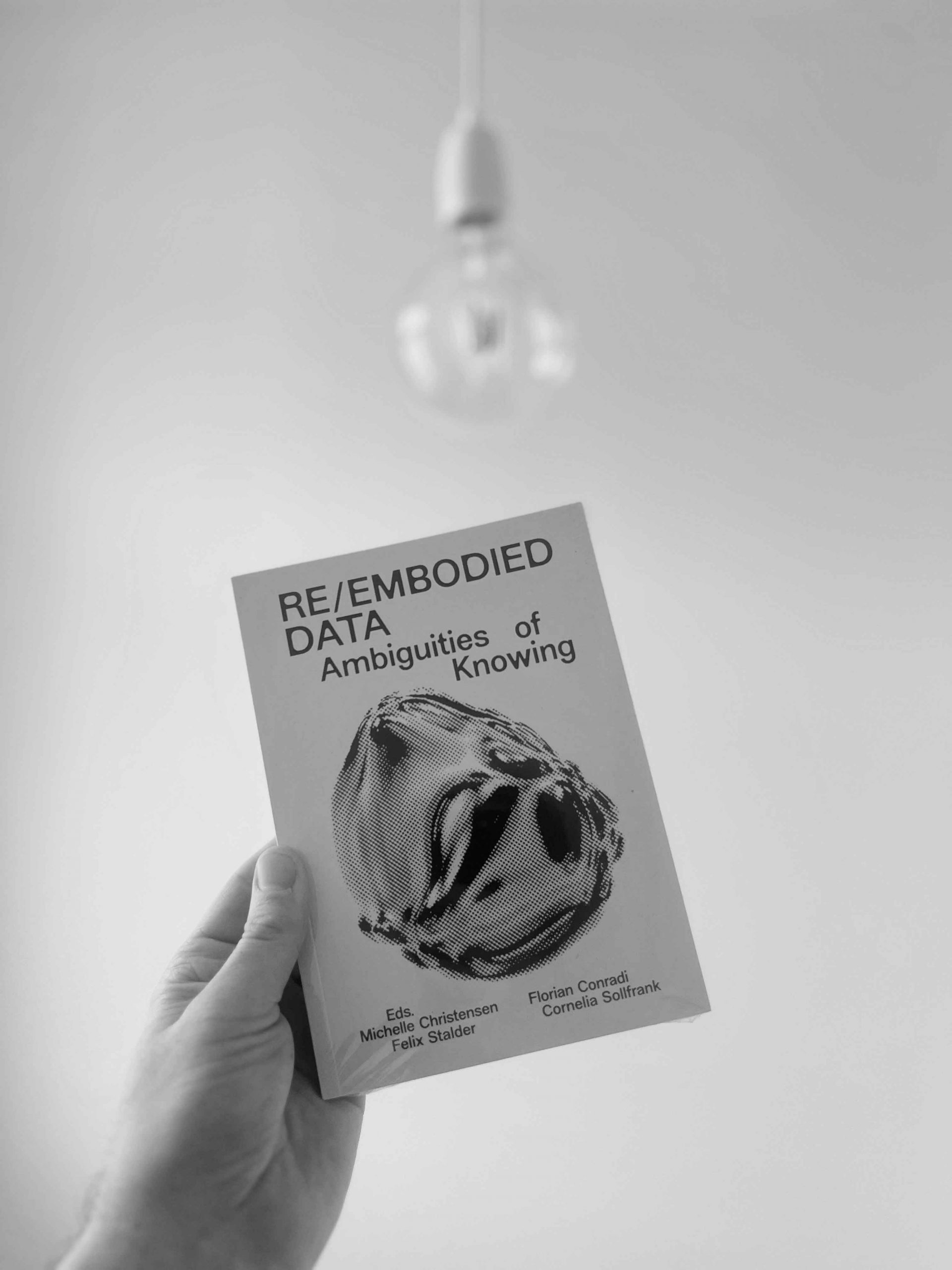
Book Presentation & Discussion – RE/EMBODIED DATA. Ambiguities of Knowing. Do you read me?! Bookstore, Berlin Mitte. With Felix Stalder, Cornelia Sollfrank and Shintaro Miyazaki.
– 05/2026
Keynote at Falling Walls Female Science Talents Symposium, Falling Walls Foundation Berlin
– 05/2026
Workshop AI Circus – Performing Bauhaus, with HS Anhalt Dessau & FU Berlin, Berlin Open Lab
– 03/2025 ∼ 07/2026
Studio Class / Politics of Design – Per/Forming Critique (juxtaposed class room), Freie Universität Berlin & Anhalt University of Applied Sciences in Dessau
– 02/2026 ∼ 06/2025
Exhibitions Politics of Design – Per/Forming Critique & A.I. ±÷›˚ò∆Sѱˆ–Ambiguous Intelligence. Included a critical reading circle & micro music performance. With students from the FU Berlin. Einstein Center Digital Future
– 02/2026
Publication: Christensen, M., Conradi, F., Sollfrank, C., Stalder, F. (Eds.)(2026). RE/EMBODIED DATA – Ambiguities of Knowing. Hamburg: adocs.
– 10/2025 ∼ 02/2026
Studio Class / A.I. Ambiguous Intelligence – Critical Curating, Artistic Research & Design, Freie Universität Berlin
– 10/2025 ∼ 03/2026
Studio Class / Politics of Design –Per/Forming Critique (juxtaposed class room), Berlin University of the Arts, Technische Universität & Freie Universität Berlin
– 10/2025
Talks & Micro-Workshop presenting projects Prompting.Flora.Archives. & Politics of Design & Algorithmic Ecologies at metaLAB (at) Harvard, Harvard University
– 10/2025
Panel debate and workshop at Innovation, AI and the Arts at 4th symposium of the Oxford Berlin Research Partnership: Innovation – pathways to societal impact, University of Oxford
– 10/2025
Block Seminar Bias + AI – Composing Critique, Technische Universität Berlin & Berlin University of the Arts
– 07/2025 ∼10/2025
Exhibition Politics of Design – Per/Forming Critique. With students from the TU Berlin, UdK Berlin, FU Berlin and HU Berlin. Einstein Center Digital Future
– 07/2025
Exhibition Algorithmic Ecologies – Data, Drips + Flows of Rainwater, Open House, Z/KU Center for Art and Urbanistics
– 07/2025
Talk Re-Inventing the Analogue in the Digital. Object, Space, Agency research group, Matters of Activity, Humboldt-Universität zu Berlin
– 07/2025
Workshop Inclusive Open Science – From Global Asymmetries to Pluriversal Design, Einstein Center Digital Future
– 06/2025
Workshop Intersectional Bias in AI: Composing Cyborgs – Per/Forming Critique, Oxford University (TORCH), Berlin University of the Arts (Berlin Open Lab) and Freie Universität Berlin (metaLAB@FU), Einstein Center Digital Future Berlin
– 06/2025
Workshop Re-Inventing the Analogue, in collaboration with Object, Space, Agency, Matters of Activity (MoA), HU Berlin, Tieranatomisches Theater Berlin
– 05/2025
Workshop Algorithmic Ecologies – Data, Drips + Flows of Rainwater at ZK/U Berlin, with the Technische Universität Berlin, Freie Universität Berlin (metaLAB@FU), Berlin University of the Arts and ZK/U Berlin Center for Art and Urbanistics
– 04/2025 ∼ 07/2025
Studio Class Politics of Design (juxtaposed class room), Berlin University of the Arts, Technische Universität & Freie Universität Berlin
– 05/2025 ∼ 10/2025
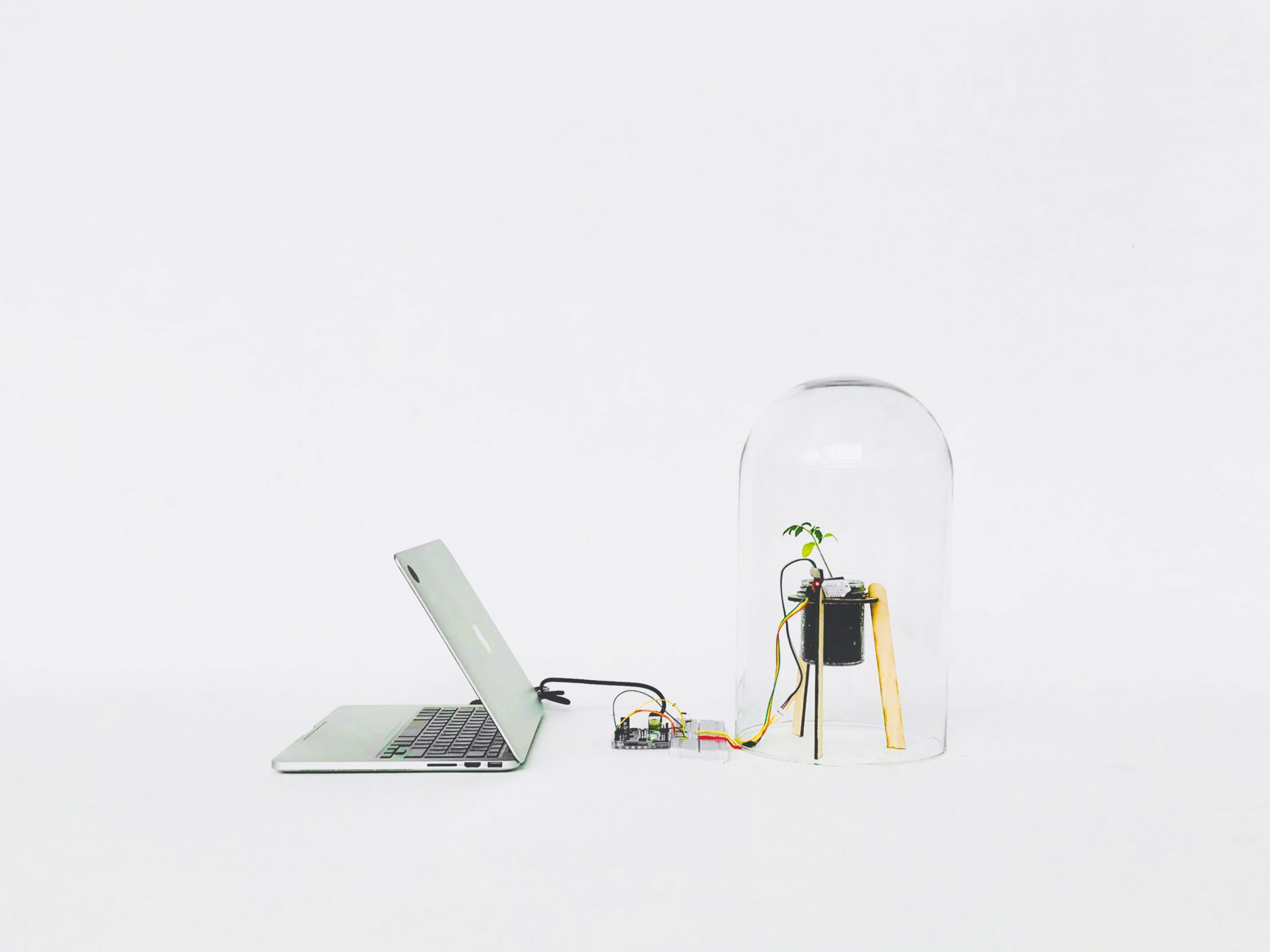
Research project Intersectional Bias in AI: Composing Cyborgs – Per/Forming Critique, Oxford University (TORCH) and Berlin University of the Arts (Berlin Open Lab)
– 05/2025
Publication: Christensen, M., Bieling, T., Conradi, F. (Eds.) (2025). New Experimental Research in Design 3 – Positions and Perspectives, Basel: Birkhäuser (De Gruyter)
– 02/2025
Kickoff Workshop Algorithmic Ecologies, Berlin University Alliance Transdisciplinary Lab, with the Technische Universität Berlin, Freie Universität Berlin (metaLAB@FU), Berlin University of the Arts and ZK/U Berlin Center for Art and Urbanistics.
– 02/2025
Block Seminar Design + Crisis: More-than-Human Technoecologies,
Technische Universität Berlin & Berlin University of the Arts
– 11/2024
Hosting and moderating Non-Anthropocentric Approaches to Space, Rhythm and Language with Anani Dodji Sanouvi + Christiane da Cunha, Salon für Ästhetische Experimente (BAS), Berlin University of the Arts
– 11/2024
Moderating panel on Feminism, Accessibility and Post-Western Perspectives, Berlin Science Week, Einstein Center Digital Future
– 11/2024
Moderating Panel Alive Matters at conference New Experimental Research in Design (NERD), Board of International Research in Design and Technische Hochschule Augsburg
– 10/2024 ∼ 01/2025
Studio Class Politics of Design: Exploring the More-than-Human, International Master’s Program in Integrated Design, Anhalt University of Applied Sciences Dessau
– 10/2024
Block Seminar Coded Bodies –
Per/forming Critique,
Technische Universität Berlin & Berlin University of the Arts
– 10/2024
Moderation of panel Case Studies on Queering Decolonial AI and conversation on Case Studies on Biohacking and Self-Design Sexes at workshop Jetsam – Acts of Queering AI. Curated by Annette Jael Lehmann, Jeffrey Schnapp and Kim Albrecht, metaLab at Harvard & FU Berlin
– 09/2024
Talk More-than-Human Design at workshop Art from Infestation, a collaboration within the Object, Space, Agency research group of Matters of Activity Cluster of Excellence, HU Berlin. Berlin Open Lab, Berlin University of the Arts
– 06/2024
Co-Hosting international symposium, Re/Embodied Data – Ambiguities of Knowing in collaboration with Cornelia Sollfrank + Felix Stalder (Zurich University of the Arts / ZHdK), Berlin Open Lab, Technische Universität Berlin & Berlin University of the Arts
– 05/2024
Lecture, Posthuman, Postwestern, Postdiscipline — Critical Approaches through Design at Lecture Series, Digital Colonialism, Design Research Lab, Berlin University of the Arts
– 04/2024
Moderating track Managing Risk at Hazarding Design – Risks and consequences of design, Annual Conference of the German Society for Design Research and Theory, Lucerne University of Applied Sciences and Arts, Lucerne, Switzerland
– 02/2024 ∼ 03/2024
Block Seminar Politics of Design, Technische Universität Berlin / Berlin University of the Arts
– 07/2023
Block Seminar Design + Crisis – Pluriversal Pathways to a Post-Anthropocene, Technische Universität Berlin / Berlin University of the Arts
– 05/2023
Projects from the ongoing studio class Politics of Design exhibited at the Berlin Design Week, designtransfer (UdK Berlin)
– 05/2023
Panel debate Critical Perspectives on AI – Invisible Labor and Discrimination: Gender, Diversity and ChatGPT, ECDF Gender and Diversity Network, Einstein Center Digital Future
– 05/2023
Co-hosting international conference / 5th NERD Conference / New Experimental Research in Design in collaboration with the Board of International Research in Design (BIRD)/ Berlin Open Lab, Technische Universität Berlin & Berlin University of the Arts
– 04/2023 ∼ 07/2023
Studio Class Politics of Design, Institute of History and Philosophy of Science, Technology and Literature, Technische Universität Berlin & Studium Generale at Berlin University of the Arts
– 03/2023
Exhibition Research through Design – Critical Inquires, Futurium Berlin, in collaboration with the Einstein Center Digital Future
– 02/2023
Block Seminar Design + Crisis – Pluriversal Pathways to a Post-Anthropocene, in collaboration with Sénamé Koffi Agbodjinou, Technische Universität Berlin / Berlin University of the Arts
– 01/2023
Open Studio Design + Critical Inquiry at BOL x Hybrid Plattform Symposium, Berlin Open Lab, Berlin University of the Arts
– 12/2022
Talk Critical Design Inquiries, KTH Royal Institute of Technology, Stockholm
– 12/2022
Panel Data, Power, Creativity – Data as an Asset or a Challenge to Democracy, at the German Federal Digital Summit 2022, Station Berlin
– 11/2022
Hosting talk, workshop + performance Multi Translation by Anani Sanouvi, Designtransfer + Berlin Open Lab, Berlin University of the Arts / Technische Universität Berlin
– 11/2022
Talk Design as Critical Inquiry on Panel What Design Can Do? HFBK Hamburg Design Sessions, with Konstantin Grcic, Felix Kosok and Friedrich von Borries, HFBK University of Fine Arts Hamburg
– 10/2022
Publication: Christensen, M., Conradi, F., Søndergaard, M., Beloff, L., Choubassi, H. (2022): Politics of the Machines – Rogue Research. UK: British Computer Society.
– 10/2022
Talk Design + Diversity – Critical Approaches through Open Tech at Open Access Week 2022, Berlin Universities Publishing – libraries of the Freie Universität, Technische Universität, Charité and Humboldt University
– 10/2022 ∼ 02/2022
Studio Class Politics of Machines, Institute of History and Philosophy of Science, Technology and Literature, Technische Universität Berlin & Studium Generale at Berlin University of the Arts
– 10/2022
Block Seminar Design and Conflict, Technische Universität Berlin / Berlin University of the Arts
– 08/2022
Jury participation Art and Computation Retreat, Weizenbaum Institute / German Informatics Society / Goethe Institute
– 07/2022
Talk on feminism, decolonialism and design on panel Living and Working with AI, symposium Academics in the Public Sphere – Navigating the Political, Berlin University Alliance and University of Oxford
– 06/2022
Talk Design Inquiries – Per/forming Critique on panel Automedia and Design of Commons. Conference Automedias – Une Révolution Médiatique, Maison des Sciences de l’Homme Paris-Nord, Paris 8 University
– 06/2022
Talk Diversity + Design – Critical Cultures and Practices, Gender and Diversity Network, Einstein Center Digital Future
– 06/2022
Talk Autonomy vs. Automation – Critical Design Inquiries, Symposium Digital Autonomy, ECDF/Weizenbaum Institute/German Informatics Society
– 05/2022
Keynote Open Science – Critical Cultures, Spaces and Practices, Annual Research Day, Cologne University of Applied Sciences
– 05/2022
Co-hosting international conference Hackers, Makers, Thinkers – Collective Experiments in Social Fermenting in collaboration with the Art Laboratory Berlin. Designtransfer/Berlin Open Lab, Berlin University of the Arts
– 04/2022
Student exchange between the Berlin University of the Arts and the University of Lomé. Exploring post-colonial entanglements, animism, African cosmologies and cosmoginies as a new paradigm of design. Organised in collaboration with Mathilde ter Heijne and Sename Koffi Aboudjinou. Lomé/Agouégan, Togo
– 04/2022 ∼ 07/2022
Studio Class Politics of Machines, Institute of History and Philosophy of Science, Technology and Literature, Technische Universität Berlin
– 03/2022
Block Seminar Critical Techno(eco)logies, Technische Universität Berlin / Berlin University of the Arts
– 03/2022
Input Talk Design as Critique – Politics, Performativity, Practice, AG Lehre, Berlin University of the Arts
– 02/2022
Lecture Open Science/Open Culture – Critical Spaces and Practices, Institute of Theater Studies, Department of Philosophy and Humanities, Freie Universität Berlin
– 12/2021
Workshop Participation Art + Computation, organised by the Goethe Institute, Weizenbaum Institute and the German Informatics Society
– 11/2021
Reading and panel The Dark Side of Design, with Uta Brandes, Jesko Fezer and Erik Spiekermann, in honour of Michael Erlhoff. Design Talks, Kunstgewerbemuseum Berlin
– 11/2021
Moderating performance and panel When a Robot Writes a Play, The Anti-dystopian Congress, Goethe-Institut Prague
– 11/2021
Jury member and panel International Gender Design Award 2021, iGDN and Museum für Angewandte Kunst Köln (MAKK)
– 10/2021 ∼ 02/2022
Studio Class Politics of Machines, Institute of History and Philosophy of Science, Technology and Literature, Technische Universität Berlin
– 09/2021
Hosting POM BLN 2021 conference Politics of the Machines – Rogue Research, a collaboration between the Technische Universität Berlin, Berlin University of the Arts, Aalto University, Aalborg University and the International University of Beirut
– 09/2021
Block Seminar Bodies in Transit – Performing Critique, Technische Universität Berlin / Berlin University of the Arts
– 07/2021
Talk Open Science – Designing Experimental Spaces for an Integrated Digital Society, Wissensstadt Berlin 2021, Kultur Projekte Berlin
– 06/2021
Publication: Christensen, M., Michel, R., Jonas, W. (Eds.) (2021). New Experimental Research in Design 2 – Positions and Perspectives. BIRD Series, Basel: Birkhäuser (De Gruyter).
– 06/2021
Publication: Christensen, M., Conradi, F., Dietze, M. (2021). Trans/Feminist Critical Making – Design as Open-Source Opposition in proceedings of Cumulus Conference 2021 Design Culture(s), Sapienza University of Rome, Rome 2021.
– 06/2021
Co-hosting conference New Experimental Research in Design NERD, Board of International Research in Design (BIRD) and Hamburg University of Applied Sciences (HAW)
– 05/2021
Keynote Open Science for Open Culture – Critical Spaces and Practices, Conference Open Science, Bern University of Applied Sciences
– 05/2021
Moderating panel Designing Resilience, conference Material Trajectories – Designing with Care, German Society for Design Theory and Research (DGTF) and cluster of excellence Matters of Activity, Humboldt Universität zu Berlin
– 04/2021 ∼ 07/2021
Studio Class Politics of Machines, Institute of History and Philosophy of Science, Technology and Literature, Technische Universität Berlin
– 03/2021
Workshop and panel on Interdisciplinary Research, ECDF Women* in STEAM network + DiGiTal Graduate Program, Digital Arts and Science Conference, Berlin
– 02/2021
Talk Critical Making – Spaces, Cultures and Practices, Lecture Series New Technologies, Technische Universität Berlin
– 12/2020
Lecture Technofeminist Design – Gender, Bias and Tactics of Hacking Back, Lecture Series Everything is Design, Westfälische Hochschule
– 12/2020
Lecture Counter-Data as Counter-Culture, lecture series Digital Future, Einstein Center Digital Future
– 11/2020
Conversation with Felix Kosok How does technology change us?, Off_line Podcast series, HfG Offenbach
– 11/2020
Publication: Christensen, M., Fezer, J., Herlo, B., Hornuff, D., Joost, G. (Eds.) (2020). Lechts und Rinks – Auseinandersetzungen mit dem Design der Neuen Rechten. Hamburg: Adocs Verlag
– 11/2020 ∼ 02/2021
Studio Class Politics of Machines, Institute of History and Philosophy of Science, Technology and Literature, Technische Universität Berlin
– 11/2020 ∼ 02/2021
Studio Class Global Makerspace(s) – Critical Perspectives, Positions and Practices, Institute of History and Philosophy of Science, Technology and Literature, in collaboration with Habitat Unit, Technische Universität Berlin
– 10/2020
Panel Digital cooperation with the ‘South’– Chances and Challenges, organised by the Berlin Center for Global Engagement (BCGE), DAAD conference Moving Target Digitalisation: Re-thinking Global Exchange in Higher Education
– 09/2020
Keynote Open Tech for Open Culture – Spaces, Attitudes and Practices, Berlin|Oxford Summer School for Open Research, University of Oxford, Berlin Institute of Health & Freie Universität Berlin
– 09/2020
Talk Ambiguous Intelligence – Per/Forming Critique, Global AI Narratives Project, University of Cambridge & the Present Futures Forum (TU Berlin)
– 09/2020
Seminar Gender & AI: Queering Technology, Institute of History and Philosophy of Science, Technology and Literature, Technische Universität Berlin
– 06/2020
Talk Open Labs: Inter- and Transdisciplinary Spaces of Research, Science Talks #ResearchAcrossBorders, Annual Meeting 2020, Alexander von Humboldt Foundation, Berlin
– 06/2020
Article Ontological Crisis (Krise des Seins) published in Form Magazine No. 288, edition on Crisis and Design
– 05/2020
Co-hosting symposium African_Makers_Against_COVID-19, a collaboration between Africa Open Science and Hardware, Berlin University of the Arts and Technical University Berlin
– 04/2020 ∼ 07/2020
Studio Class Politics of Machines, Institute of History and Philosophy of Science, Technology and Literature, Technische Universität Berlin
– 02/2020
Book published Politics of Things: A Critical Approach through Design, Birkhäuser, Basel
– 02/2020
Panel Algorithms and the reproduction of social inequality – is artificial intelligence sexist?, Embassy of France, Berlin
– 12/2019
Hosting symposium Trans/Feminist Hacking – Spaces, Communities and Practices, Einstein Center Digital Future, Berlin
– 12/2019
Hosting symposium Open Materials – Crystals, Communities, Concerns, Berlin Open Lab,
Berlin University of the Arts
– 11/2019
Talk Algorithmic Aristocracy, Biased Biometrics and Compromised Code – Design as a Tactic of Re/Activism, German Society for Design Theory and Research / Kunsthochschule Kassel
– 11/2019
Keynote Gender, Bias and Technology – on Hacking Back at iphiGenia International Gender Design Award 2019, Museum für Angewandte Kunst Köln (MAKK)
– 11/2019
Talk Design as Critical Inquiry – Performativity, Politics and Practice at New Experimental Research in Design (NERD), Academy of Art and Design Basel (FNHW)
– 10/2019 ∼ 02/2020
Studio class Critical Making – Politics of Things, Technische Universität Berlin
– 10/2019
Talk Making Critical Tech – Design Activism and AI at Diffracting AI and Robotics: Decolonial and Feminist Perspectives, Goethe University, Frankfurt
– 10/2019
Talk Design Re/Activism – Queering AI, at Artificial Intelligence: The Prejudice of the Learning Machine, Futurium, Berlin
– 10/2019
Methods seminar AI Systems Que(e)ry,
Berlin University of the Arts
– 10/2019
Panel + Workshop Rouge Research – Composing the Critical Class at Hurra Hurra – Festival on Design Education in the 21st Century, Burg Giebichenstein Kunsthochschule Halle
– 09/2019
Moderating panel Bionics Labs, Robot Bees, and Cyborgs at the International Literature Festival Berlin (ilb’19), HAU, Berlin
– 09/2019
Talk DIY/DIT Development – New Spaces, Modes and Materials at International Conference on Sustainable Development 2019, Rome
– 06/2019
Publication: Christensen, M., Conradi, F. (2019). Hacking Body Politics: Tackling the Technical Tropes, in proceedings of Politics of the Machines – Art/Conflict, Lebanese International University, Beirut. London: The British Computer Society, eWiC series.
– 06/2019
Talk The Dis/Order of Things at Digital Things, Grimme Research College, University of Cologne
– 06/2019
Talk Open So(u)rcery: DIY Counterapparatus, Politics of the Machine Conference (POM), Lebanese International University, Beirut
– 05/2019
Moderating panel New Philosophies: Paradigm Shifts in a Machine-intelligent World, Future Affairs – Resetting Global Power Politics, Federal Foreign Office, Berlin
– 05/2019
Talk Speculative Actuality – Critical Making as a tactic to hack the now at panel Designing Tomorrows – Science Fiction as a Method, re:publica 2019, Berlin
– 02/2019 ∼ 05/2019
Exhibition Not my Thing – Gender in Design at Museum Ulm, HfG-Archive Ulm
– 02/2019
Workshop Making Makerspaces at Office of Research, Innovation and Development, University of Ghana, Accra
– 02/2019
Talk Open Labs, GIZ Office Lomé, Togo
– 10/2018 ∼ 01/2019
Studio class Politics of Design, Masters of Integrated Design (MAID), Department of Design, Anhalt University of Applied Sciences (Dessau)
– 11/2018
Roundtable Open Source Mobility, Open Source Lab, German Research Center for Artificial Intelligence (DFKI)
– 11/2018
Jury member, iphiGenia International Gender Design Award 2018, iGDN and Museum für Angewandte Kunst Köln (MAKK).
– 06/2018
Co-moderating conference New Experimental Research in Design (NERD) at the University of Applied Sciences and Arts Hildesheim (HAWK), with the Board of International Research in Design (BIRD)
– 03/2018
Panel On Gender and Design, SDN Research Summit Beyond Change: Questioning the Role of Design in times of Global Transformations, FHNW Academy of Art and Design Basel
– 02/2018
Talk Gender Equality Through Design: On Maker Culture and Open Labs, United Nations Global Forum on Business for Gender Equality, Santiago de Chile
– 10/2017 ∼ 01/2018
Semester course Methodology and Design, Integrated Design, Department of Design, Anhalt University of Applied Sciences (Dessau)
– 10/2017
Chapter What we design, designs us back published in Brandes, U. Gender Design – Rambles between Theory and Research. Birkhäuser, Basel
– 10/2017
Article Open-source cyborgs and DIY data published in Gender. Journal for Gender, Culture and Society, special issue on Gender and Design (3/17)
– 10/2017
Initiating interdisciplinary format Pairing Research Talks, Einstein Center Digital Future, launched during the Science Week 2017.
– 10/2017
Jury member, iphiGenia Gender Design Award 2017 (iGDA), Category Revolution, Museum für Angewandte Kunst Köln/MAKK.
– 06/2017
Co-moderating conference New Experimental Research in Design (NERD) at Braunschweig University of Art (HBK), with the Board of International Research in Design (BIRD)
DESIGN /
RESEARCH
Critical Inquiry + Design is a research site and teaching project existing as a collaboration between the research group Design, Diversity and New Commons at the Berlin University of the Arts, the area of Design Research and Critical Design at the Institute of Theater Studies at the Freie Universität Berlin, and the Chair for Open Science & Critical Culture at the Institute of Philosophy at Technische Universität Berlin (from 2019-2026). The space was initiated as a site of inquiry with the aim to establish a temporary transdisciplinary and trans-university terrain that attempts to blur the boundaries of theory and practice, academia and activism, and science and civil society.
In this context, students and researchers from different disciplines, institutions and geographies collaborate on project-base, to debate, prototype and formulate commons-based critical perspectives and practices. The research, teaching and experimental design practice carried out within the group focuses particularly on feminist/queer, beyond-western-centric and circular approaches to design, using practice-based methodologies of critical making and designing. The research projects aim to contribute to the growing field of interdisciplinary theory that describes and discusses the currently highly excluding politics of technology and the potential of using free/open and democratized technology practices (critical making, hacking and designing) to illicit critiques and counter-practices (2019-2027).
Postdisciplinary Pedagogy – Since 2019, studio classes and block seminars bring together students with diverse backgrounds in order to explore, practice and formulate critical perspectives on the politics of design and technology. With students from philosophy, communication and cultural science, social science, social psychology, product and fashion design, sculpture, architecture, musicology, IT/programming, civil engineering, medicine and physics – the classes discuss ethical, social and political implications of technology. Drawing on the approaches of open science, critical making and designing, using open-source software, hardware and wetware and a Do-it-Together approach, students prototype possibilities and provocations, integrating critical thinking with critical fabrication to develop perspectives on design and technology from a multifaceted postdisciplinary perspective. Tackling issues from material circularity and feminist technology to countering surveillance capitalism and decolonizing the internet – both critique and fabrication are opened up to novel perspectives, experiences and queries (2019-2025).
RE/EMBODIED DATA – Ambiguities of Knowing. 20.06.24, Berlin Open Lab (UdK + TU Berlin). International symposium in collaboration with Felix Stalder + Cornelia Sollfrank (research project Latent Spaces. Performing Ambiguous Data, ZHdK). The symposium was organised jointly by the Berlin University of the Arts, the Technische Universität Berlin and the Zurich University of the Arts. Critically examining the rise of datafication and exploring alternative modes of the relationship between quantifiable and experiential, abstracted and embodied knowledge. Venue Website -> Re/Embodied Data – Ambiguities of Knowing. The venue was composed of 3 dialogue sessions:
Dialogue 1: Quantification of Breathing (Cornelia Sollfrank + Ulrich Ott moderated by Michelle Christensen). Dialogue 2: More-than-Human Technoecologies (Michelle Christensen, Florian Conradi, Sénamé Koffi Agbodjinou + Anani Dodji Sanouvi, moderated by Ines Weigand). Dialogue 3: Wildlife and Data (Felix Stalder in conversation with Johannes Fritz, moderated by Shusha Niederberger). A contextualisation and summary discussion led by Annette Jael Lehmann + Cornelia Sollfrank and the audience rounded off the venue.
An exhibition of critical design interventions took place during the symposia with projects by: Deborah Schaper, Athena Grandis, Anika Merklein, Selenay Kiray, Joel Tenenberg, Laurenz Sachenbacher, Berenike Melchior + Charlotte Golz.
Politics of the Machines – Rogue Research. Within the Politics of the Machines conference series, following Copenhagen (2018) and Beirut (2019), the third POM conference took place as a hybrid event based in Berlin on September 14-17, 2021. The conference was carried out as a collaboration between the Technical University Berlin, the Berlin University of the Arts, Aalto University, Aalborg University and the International University of Beirut. The conference was comprised of a series of tracks and interventions that were generated based on an open call for topics, and brought together track chairs, speakers and interveners from 31 countries across Europe, Asia, Africa, North and South America, representing critical perspectives on technology (decolonial, feminist and sustainable approaches) across disciplines, as well as across and between art, design, science and civil society (2020-2021). Initiated series by Morten Søndergaard + Laura Beloff and in collaboration with Hassan Choubassi and Joe Elias. Publication: Politics of the Machines – Rogue Research –> Conference Proceedings
African Makers Against COVID19 – Exploring Open Source Responses to a Global Crisis. Digital roundtable organised in May 2020, including speakers from labs in Ghana, Togo, Nigeria, Cameroon and Senegal, who displayed and discussed a number of rapid responses enabling personal protection, sanitation and medical equipment currently being developed in response to the COVID pandemic. In a Do-It-Yourself (DIY) and Do-It-Together (DIT) manner, these projects demonstrated an open, rapid and Bottom-up response to the crisis – drawing on self produced infrastructures and expertise, a cross-continental sharing of knowledge, skills and open-source files, and utilising novel forms of collaboration between academia, civil society and politics. The roundtable was co-organized with Gameli Adzaho from Africa Open Science & Hardware (Africa OSH) and the Weizenbaum Institute, in dialogue with the GIZ Togo and GIZ Ghana. Speakers included: Joshua Opoku Agyemang Otoo, IoT Network Hub, Ghana / Dr. Khadidiatou Sall, SN3D-COVID19, Senegal / Ousia Foli-Bebe, EcoTec Lab, Togo / Obasegun Ayodele, Vilsquare Makers Hub, Nigeria / Nadine Mowoh, Mboalab, Cameroon / Evans Djangbah, Kumasi Hive, Ghana (2020).
Politics of Things: A Critical Approach Through Design – In a state of ontological crisis, all boundaries have been ruptured between nature and culture, human and machine, and object and subject. We find ourselves exhaustively tackling the turmoil of our own designed circumstances, as we emerge to become extensions of the extensions that we built. In this practice-based design theory project, the authors share their experiments in negotiating power with things, hacking mundane objects, and thus their own everyday lives, allowing themselves to be swayed and misled, disrupted and called into question. The experiments delineate a mode of critical cultural inquiry where design and sociology collide to elicit critical perspectives on the ‘designer’ and the ‘designed’ as we act within an entangled politics of things (Basel: Birkhäuser, 2019).
Trans/ Feminist Hacking – Spaces, Communities, Practices. Two-day symposium organised at the ECDF inn December 2019, bringing together academics, artists and activists involved in trans/feminist maker- and hackspaces from Germany, Austria, Greece, Croatia, Spain, UK, US, Israel, Canada, Indonesia, Ghana and India. This symposium gathered perspectives, experiences and positions on trans/feminist hackspaces and practices in order to discuss the chances as well as current challenges of a growing international community. From experiments in open software, hardware and wetware, to explorative pedagogies and space-making – the symposium debated modes and tactics of inclusive open technology. Speakers included: Cornelia Sollfrank (DE)/ Paula Pin (ES) / Mary Maggic (US) / Irene Agrivine (ID) / Asa Rahmana (ID) / Yuwei Lin (UK) / Dorothé Smit (AT) / goldjian (CA) / Deborah Hustic (HR) / Natalia Rozalia Avlona (GR) / Reni Hofmüller (AT) / Verena Kuni (AT) / Denisa Kera (IL) / Efe Franca Plange (GH) / lizvlx (AT) / Marie Kochsiek (DE) / Marie Dietze (DE) / Raashi Saxena (IN) / Elke Krasny (AT) / Mino (DE) / Taguhi Torosyan (DK). Organised in collaboration with Stefanie Wuschitz (2019).
Open Materials – Crystals, Communities, Concerns. Symposium carried out at the Berlin Open Lab in December 2019, bringing together designers, makers, sustainability activists and DIY-biologists to debate open-source sustainable materials. In three hands-on workshops, the geopolitics and life cycles of everyday devices was debated through disassembling electronic waste, the potential of growing ‘organic technology’ was discussed and speculated on in a crystal fabrication workshop, and the in/formal maker communities forming around such sustainability practices were mapped based on case studies of Berlin and Accra. In the public forum that followed, invited speakers presented ethnographic explorations of ‘prototyping environmental sustainability’ based on approaches of community science, citizen science, DIY biology and critical maker culture (2019).
Serendipitous Systems – Designing un/guiding-systems such as the De-Routing probe, De-Routing App., and the Mapping Matter/s probe, creating generative systems that lead to spaces which not us, nor the system, can foresee. The explorative methods evolved unanticipated observations in urban spaces, from black holes and cultural voids, to social thresholds and gendered spaces. Known spaces were perceived anew as alternate sites, as strange serendipitous social encounters unfolded / For the project ‘Community Now? Conflict, Interventions, New Publics’, a collaboration between the Design Research Lab Berlin, the Bezalel Academy for Art and Design Jerusalem and the German Society for Design Theory and Research (2013-2015).
Confused, Ir/regular and In/correct –
De-gendering everyday life – the letters in the font ‘Confused.ttf’ cannot decide what letter to be as they each share their body with a fellow letter establishing unintentional multiplicity in content. Adding the option of ‘Irregular’ to the traditional options of ‘Regular’, ‘Bold’ etc. in a number of the most used fonts enables a slightly uncomfortable diversity in usually very secure typographies, and hence, the content that they hold. And the ‘In/correct’ file autocorrects a library of words whilst typing distorting gendered-meaning in the process of its construction / Developed in the context of the International Gender Design Network (iGDN), exhibited at the Hong Kong Polytechnic University, DesignExport Hamburg, and the Designtransfer in Berlin (2014).
Stateless Plug-in – Developing a browser extension that intervenes in digital territory, transforming the issue of stateless people into a multifaceted digital mapping of existing knowledge and information on the Internet. The plug-in generates an unpredicted non-linear and dynamic storyline through browsing, allowing space for unanticipated thoughts and connections. It intervenes by beseeching the users attention through the infiltration of their usual browsing behaviour / Developed for Firefox, Safari and Chrome, funded by the Dutch Mediafonds. Presented at ‘Media Squares, on New Forms of Protests and their Media’ at De Balie, Amsterdam, and featured by amongst others turbulence.org blog ‘networked performance’, and tacticalmediafiles.net (2010-2011).
Theorizing Design / Designing Theory – Materialising critical theories – transforming Michel Foucault’s Interrelational Power in to a table, Judith Butler’s Gender Performativity in to chairs, Écriture féminine in to dresses etc. – and then in turn theorising these objects to reveal a series of ‘Thinking Things’. The project explored this praxis-theory relationship from an ad-hoc perspective, arguing that objects, rather than being an objective inanimate species, or simply the projections or extensions of their human counterpart, emerge with arguments of their own / KISD Cologne, exhibited at the Dutch Design Week and the Passagen Interior Design Week in the exhibition ‘To Object the Objectivity of an Object’ (2010-2011).
Grammatology of a District – Exploring the potentials of communication design in understanding how covert manifestations emerge and form incidental meaning – how is the city written, how do we read an urban space, and when do surfaces interact to take on arguments of their own. The project resulted in what was termed the ‘terminology’ of the district – the basic elements that form the visual vocabulary of the space. The ‘grammar’ of the district – the interaction of terminology within certain rules of formulation. And the ‘arguments’ of the district – namely that within a semantically loaded space, the actors (objects, communication, buildings) transcend intentionality, merging and clashing as they take on unintended meaning / DQE Academy, Design Quartier Ehrenfeld, Cologne (2011-2012).
Un-Specifics – Experimenting with ‘open work’, designing with a void of meaning. From messages only appearing when the receiver manages to view the text on the poster cross-eyed and words only appearing in certain light, to messages that can only be read when subduing oneself by bowing down to the poster itself – the project investigated the question of ‘what lies just prior to the specific’, and how the receiver can awarely partake in the making-of-meaning / The project ‘Pre-Specifics: Access X’ was conducted by Onomatopee, resulting in a publication and exhibitions at Röda Sten in Gothenburg and the Dutch Design Week in Eindhoven (2010).
Politics of Sound / Sound of Politics – As a practice-based exploration of the intertwining of politics and sound, a series of social-artifactual experiments were carried out in collaboration with Istanbul-based designer Ogul Oz – from ‘auditive typography’ and ‘visual noise’, to re-gendering music tracks and dissecting the rhetoric of the pop-stars of politics / Funded by the Design Quartier Ehrenfeld, exhibited at the PDF Festival for Urban Culture in Cologne (2009).
Embassy of Hybrid Cultural Identity – A temporary embassy was established to investigate hybridity as a starting point for cultural identity, inviting the public to participate in negotiating such an identity, and claiming its legitimacy. Emerging from this social experiment was a charter, which could be re/read from a perhaps infinite diverse perspectives, as well as a dissolving book that sought to instigate an alternative discourse on the integration debate in Western Europe / Funded by and shown at the Nieuwe Vide Art Space in Haarlem, the Netherlands (2009).
Re/Construction – Deconstructing the blue United Nations flag by statistically re-visualising in three flags the data behind the questions: When looking at the United Nations Peacekeeping Missions who makes the decision to send troops to war? Who pays for it? And who actually fights as a soldier on the ground? / Sandberg Institute (Rietveld Academy), exhibited amongst other places at the Netherlands Institute for Media Art (NIMk) and the exhibition ‘Design.Politicized.’ at the DQE in Cologne (2008).
Un/Commentary, Northern Uganda – A documentary film about how (not) to make a film about female child soldiers in Northern Uganda, in which the filmmakers share their ceaseless debate about how to un/make the film with the audience, resulting in an uncensored and personal take on the ethics of editing / Field research carried out in 2007, funded by Oxfam Novib, and presented amongst other places at the University of Amsterdam, Amnesty International, the Netherlands Institute for Media Art (NIMk) and the Lloyd Cultural Embassy in Amsterdam (2007-2008).
Communication Conflict – The newspaper 33 Grad Nord 44 Grad Ost portrays a critical discussion concerning the forming of isolated realities through the use of text, photography and illustration in newspapers based on articles about the conflict in Iraq from the German Newspaper ‘Die Welt’. The work questions elements such as the relevance of the individual in war, the lack of importance that numbers of casualties come to have, and how conflicts easily become converted into technical aspects of military tactic and strategy. On the one side factual, and simultaneously an interpretive provocation, the newspaper operates critically between the fact and fiction of portrayals of conflicts in the media / Carried out in the context of giving a course at the University of Applied Sciences Mainz (2006); contributions from Sun Mee Martin, Andrea Bayer and Mark Brehm; published in input/output and shown at exhibitions in the Netherlands, Germany, Spain and Japan.